What If Fish Could Tell Stories?
If fish could tell stories, they would never get caught. There would be stories about floating worms and how fish of the past were lured by easy meals and taken into the great beyond. There would be stories about the floating blanket, the net that swept entire schools away at once. These stories would be warnings, passed from one generation to the next.
But fish can’t talk. They can’t share memories. So each generation bites the same hooks, swims into the same nets, and disappears in the same silence.
Humans, thankfully, can tell stories. And yet we keep getting caught.
The question, then, is not whether we have stories but which stories dominate, and which ones are never told.
The stories we tell ourselves
We tell ourselves that this is just the way things are. That poverty is unfortunate but inevitable. That racism is a mistake of the past and not a structure of the present. That war is tragic but unavoidable. These stories make human-made systems feel like natural laws, like weather. And what feels natural rarely gets challenged.
We tell ourselves that success equals worth. That those at the top earned their place and those at the bottom failed. This story disguises inequality as fairness and turns survival into a competition instead of a collective responsibility.
We tell ourselves that growth is always good. More production, more consumption, more extraction, no matter the cost. We tell ourselves that violence brings safety. That more weapons, more prisons, and more borders will finally bring peace despite centuries of evidence to the contrary.
And perhaps most dangerously, we tell ourselves that we are separate: separate from nature, separate from each other, separate from the consequences of our actions. This story makes harm feel distant and responsibility optional.
The stories we don’t tell ourselves
What we don’t tell ourselves is that these systems were designed. Poverty, racism, and war are not accidents. They are built, maintained, and often profitable. What was designed can be redesigned, but only if we name it.
We don’t tell ourselves that trauma travels through generations. Histories of slavery, colonization, genocide, and displacement don’t disappear; they echo. When we refuse collective healing, unresolved trauma shows up as policy, policing, and prejudice.
We don’t tell ourselves that we are repeating patterns, not simply making progress. New technologies mask old hierarchies. New weapons fight old wars. Advancement becomes a distraction from reflection.
We don’t tell ourselves that enough already exists. Scarcity is often manufactured, not real. There is enough food, wealth, and knowledge to meet human needs, but not without challenging concentrated power.
And we rarely tell ourselves that listening is a survival skill. We glorify speaking, conquering, and winning, but real survival comes from remembering, sharing, connecting, and operating in truth.
If fish could tell stories, they would learn to avoid the hook.
Humans can tell stories, but until those stories are truthful, we will keep mistaking traps for opportunities and nets for destiny.
That's the work we're trying to do together.
Join us on the last Tuesday and Wednesday of every month from 9:30 a.m. to 11:30 a.m. for Community Spring's Storytelling For Change Workshops. Participation counts toward community service hours, a concrete way to invest in your community while building real communication, leadership, and empathy skills.
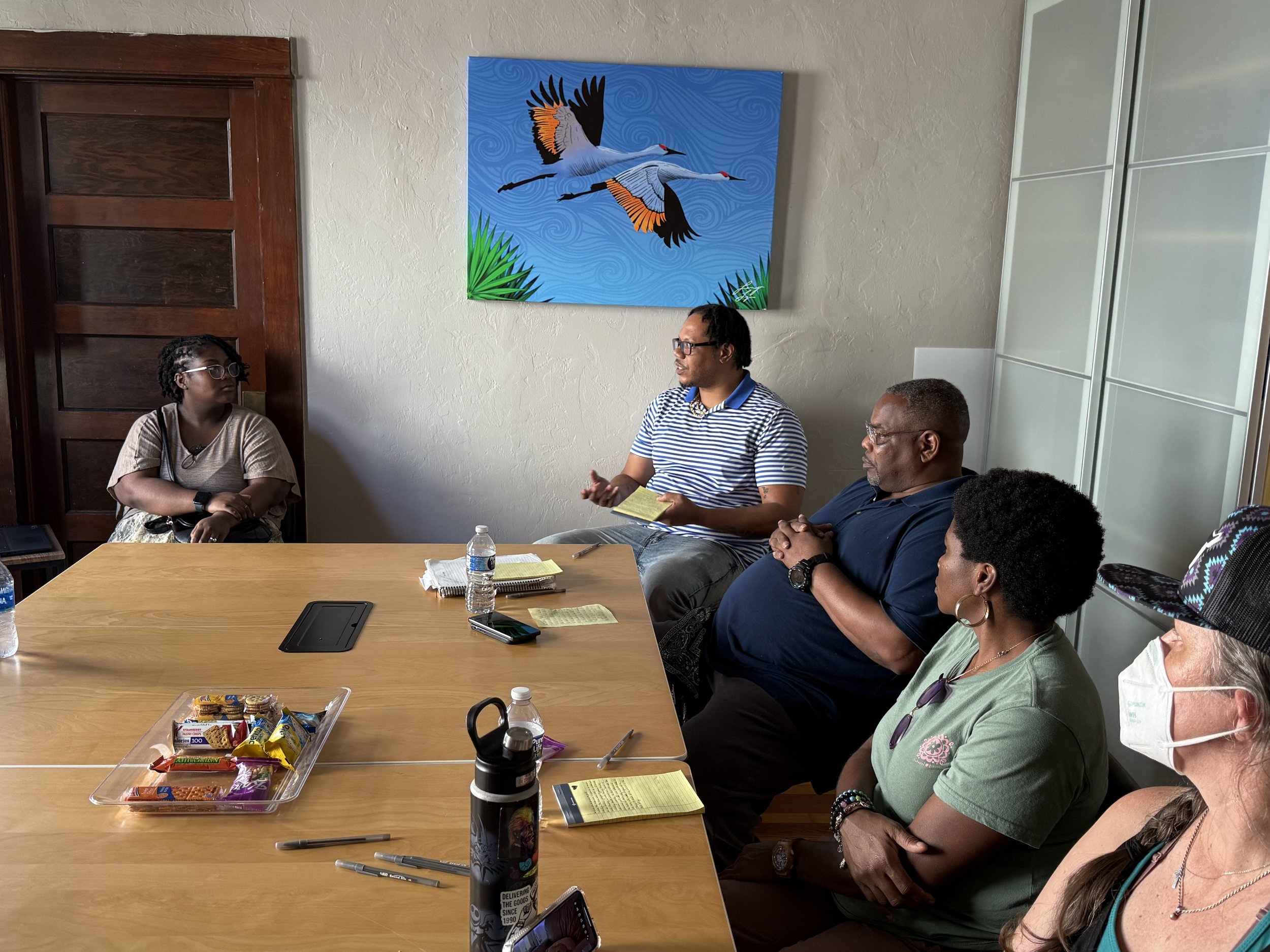
Together, we can create a space where stories are not only shared but honored, where lived experiences become lessons, connections become stronger, and communities become more resilient.
The stories that shape the future are being written right now. Come help us tell the ones that numbers can't capture.